
那年花开月正圆
Pony.ai’s autonomous-driving distance tops 100m km as China scales up L4 commercialization_我的网站

A | 7月8日,江西省民政厅在南昌召开全省福彩年中业务培训,调度推进全省福彩工作。省民政厅党组成员、副厅长黄永茂出席会议并讲话,省福彩中心主要负责同志作上半年全省福彩市场形势分析,各设区市民政局分管同志进行交流发言。
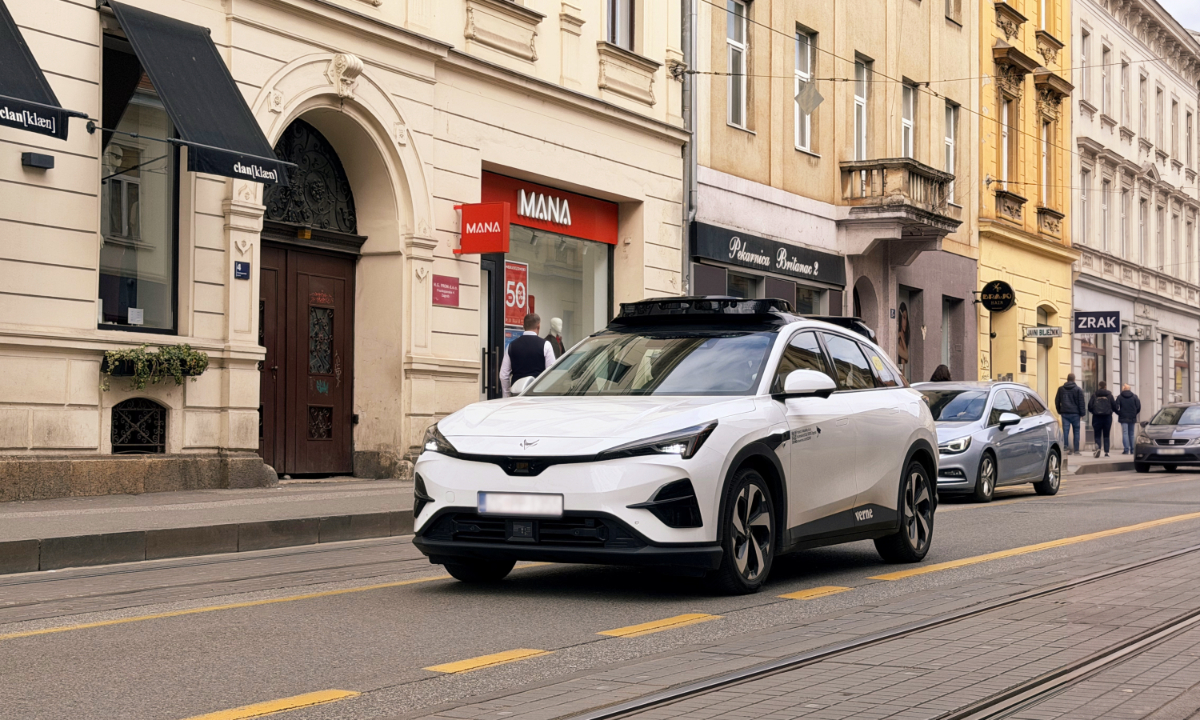
Chinese autonomous-driving company Pony.ai said on Monday that its cumulative autonomous-driving distance worldwide has surpassed 100 million kilometers, marking the latest milestone as China's driverless sector moves from technology validation toward mass production and scaled commercial deployment.
The milestone comes as L4 autonomous driving gains commercial traction across passenger transport and logistics in China, while Chinese companies are accelerating overseas deployment through partnerships with local operators in markets including Europe and Southeast Asia.
Industry experts said that the significance goes beyond rising distance. As commercialization gathers pace, the next phase of competition will increasingly hinge on whether autonomous-driving technology can be deployed at scale, brought down to commercially viable costs and replicated across different transport scenarios and markets.
At a recent media briefing, Pony.ai said that its fourth-generation L4 autonomous electric heavy-duty truck had entered mass production, with commercial operations expected to begin in the coming months. The company plans to deploy 500 to 1,000 trucks over the next two to three years across long-haul freight, bulk cargo transport and port logistics.
A notable part of that transition is the sharp decline in costs. Autonomous-driving hardware costs for Pony.ai's fourth-generation heavy truck are about 70 percent lower than for the previous generation, according to the company.
Similar cost reductions are also emerging in robotaxis. Pony.ai said on its official blog that the bill-of-materials cost of the autonomous-driving kit for its seventh-generation robotaxi has fallen 70 percent from the previous generation, helping the company achieve unit-economics breakeven in Guangzhou and Shenzhen, South China's Guangdong Province.
China's autonomous-driving sector is moving from technology validation to large-scale commercial deployment, underpinned by the rapid accumulation of real-world driving data, Pan Helin, a member of the Expert Committee for the Ministry of Industry and Information Technology, told the Global Times on Monday.
"Continuous road testing allows L4 systems to better adapt to local traffic conditions, laying the groundwork for wider commercial use," Pan said.
China has opened multiple cities to autonomous-driving applications, with commercialization gathering pace. As deployment expands and marginal technology costs fall, autonomous driving is expected to unlock significant commercial value and emerge as a new form of mobility, veteran industry analyst Liu Dingding told the Global Times.
Pony.ai aims to expand its robotaxi fleet to more than 3,000 vehicles by the end of 2026 and operate in 20 cities worldwide, with nearly half of those cities overseas. It also plans to develop an international version of its seventh-generation robotaxi tailored to different regulatory requirements and infrastructure, supporting the deployment of more than 1,000 vehicles in overseas markets.
Pony.ai's ambition also reflects a broader push by Chinese autonomous-driving companies to expand overseas.
On August 3, WeRide announced a partnership with Danish shared-mobility platform GreenMobility to deploy autonomous ride-hailing services in Denmark, marking its first entry into the Nordic region and sixth European market. Subject to regulatory approval, the service is expected to open to the public in the first half of 2027 using WeRide's latest GXR L4 robotaxi.
WeRide said on its website that its autonomous-driving products are now deployed in more than 40 cities across 12 countries. The company holds autonomous-driving permits in eight markets and operates a global L4 fleet of more than 3,000 vehicles.
A similar expansion is taking place in public transport. On July 17, Chinese autonomous-driving company MOGOX announced a strategic partnership with Singapore-based ComfortDelGro Bus. The two companies will cooperate on autonomous-vehicle deployment and operations, commercial expansion and coordination with regulators.
Pan said that China's autonomous-driving sector has two key advantages: a broad supplier base for major components and a large domestic market that allows companies to deploy services widely and accumulate real-world data. Advances in simulation and synthetic-data technologies have further strengthened the sector's ability to train and refine autonomous-driving systems.
Liu pointed to the cost benefits of scale. As deployment expands, the cost of key automotive-grade components such as lidar and chips continues to fall, improving the economics of commercial operations and creating more room for technological iteration, he said.
。会议指出,上半年全省民政部门和福彩机构深刻把握福利彩票的政治性、人民性、公益性,坚持“扶老、助残、救孤、济困”发行宗旨,紧盯年度目标任务攻坚克难,拓市场、稳销量、强规范、守底线,全省福彩事业保持平稳有序发展态势。

B | 黄永茂在讲话中强调,今年是“十五五”开局之年,也是全省福彩提质增效、破局突围的关键之年。全省民政系统要学习贯彻习近平总书记关于树立和践行正确政绩观的重要论述,以正确政绩观引领福彩事业高质量发展。

C | 各地民政局要加强组织领导,履行好主管部门职责,把福彩工作与其他民政业务一体部署、一体推进。要坚持统筹兼顾抓渠道,巩固传统基本盘,持续拓展新渠道,强化赋能和帮扶;要坚持创新营销抓市场,以更加科学灵活、高效务实的营销模式放大市场效应;要坚持靶向发力抓突破,聚焦拓展彩民核心、县域市场发展、新媒体运用抓手,大力培育新动能,激发市场发展活力;要坚持严管厚爱抓队伍,大力加强队伍建设,优化队伍作风,提升队伍素质本领,完善考核激励机制,凝聚发展合力;要坚持规范为基抓安全,强化忧患意识、坚持底线思维,统筹抓好销售渠道、市场管理、意识形态各领域安全风险防控。当天,省福彩中心还召开营销工作培训,就上半年全省营销活动进行复盘总结,部署下半年重点市场工作。省福彩中心班子成员、中层干部及各设区市福彩机构负责人和市场部长参加培训。
Current article:http://7su.feizengbubaipeirangnalouchuo.sbs/h13d/jod15w.html
Published on:18:53:25
 环太平洋
环太平洋 痞子英雄
痞子英雄